
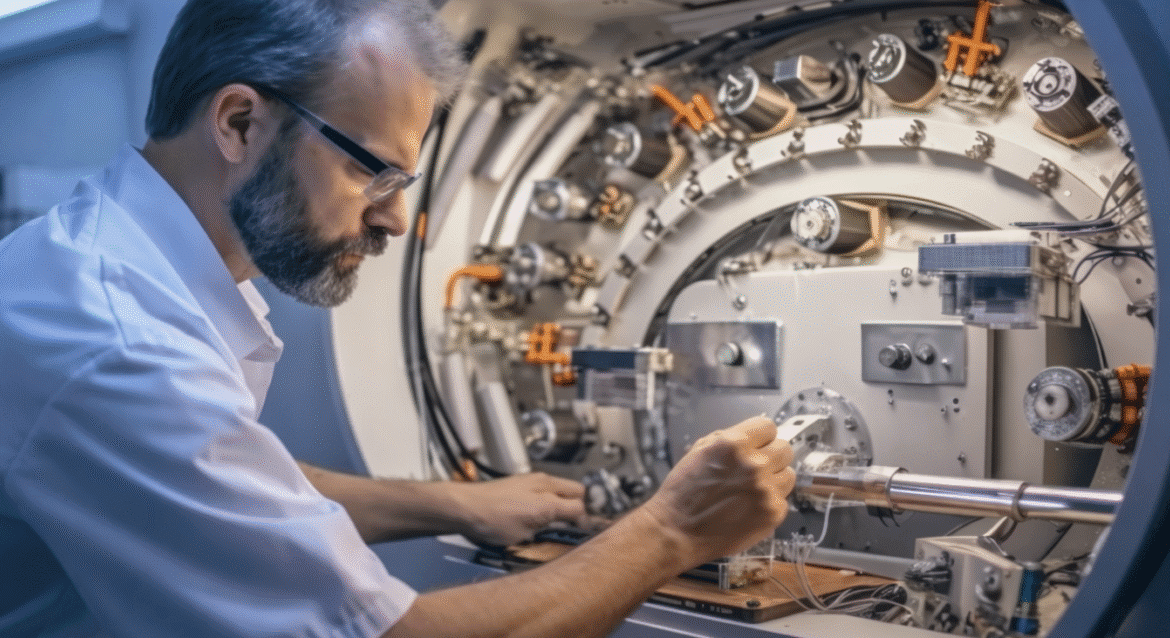
Hospital Equipment Downtime Is a Threat to Patient Care
After three hours of operation one morning, the hospital’s MRI equipment goes offline. The ten additional scheduled radiology appointments are suddenly backed up until late at night, if not until tomorrow in the best-case scenario.
Over in the ICU a ventilator fails, and a patient is immediately thrust into an unplanned extubation and is now in a major crisis. Staff scramble to locate and engage a working ventilator.
Unplanned equipment downtime negatively impacts people’s very existence. At the very least, it can disrupt schedules and care for dozens of other people. And it can inflict severe reputational harm as well as financial damage to hospitals and medical centers.
Clinical Excellence Is Not Static
Hospitals invest heavily in clinical excellence, with millions of dollars’ worth of diagnostic and therapeutic equipment deployed in virtually every department. Radiology and imaging departments, ICUs, ORs, Emergency, med-surg, and telemetry to mention just a few departments, are typically full of state-of-the-art technology. Much biomedical equipment is a combination of mechanical and electronic. Software runs throughout the hospital environment.
Often, hospital IT and biomed staff and 3rd-party or manufacturer services manage these systems reactively. In other words, fix it when it breaks down.
Reactive biomedical engineering is inefficient and easily one of the biggest operational risks in healthcare.
Biomed as a Reactive Function
Given all of the departments and medical specialties represented in the modern hospital, it’s not a surprise that fragmentation is the rule not the exception when it comes to maintenance.
In the typical environment, hospitals support multiple CMMS platforms across departments. Technicians, doctors, PAs, and nurses use manual logs and spreadsheets to fill the gaps when they either can’t get to a system, or they are in the middle of a fluid situation. As such, there’s really no unified visibility across all device categories.
A case study on this site references a typical situation:
- A 400-bed hospital
- 3 CMMS systems + manual tracking
- 47 equipment categories
The key insight from that case study was that:
Hospitals don’t lack data, they lack operational coherence.
Preventive Maintenance Does Not Equal Continuous Reliability

Many organizations believe that’s by having scheduled preventive maintenance they guarantee continuous reliability. Unfortunately there are several problems with this practice. In the first-place devices begin to degrade immediately following an inspection. If a hospital inspects equipment once a month then that is a long time available for a breakdown in the equipment. There’s no condition monitoring between cycles. This raises another consideration, which is that the technicians performing preventive maintenance are primarily looking for specific issues. If a problem does not fit into one of those categories that they are predisposed to find to look for then technicians may very well miss that problem.
As a result failures can occur unpredictably, and maintenance becomes reactive by design. As we’ve described previously reactive maintenance can produce cascading problems and unpredictable workforce management issues.
What Reactive Biomed Really Costs
Just like the proverbial iceberg, most of the costs of a reactive biomedical maintenance approach are below the surface in financial reporting. The true cost of reactive maintenance is a mix of actual cost and implicit or opportunity cost. As an example, a hospital may spend as much as $10K+ per month for a service contract on an MRI machine. The labor cost for an MRI technician can run anywhere from $150 to $600 per hour. But those actual costs are compounded by the imputed cost of a downed MRI.
Cascading Delays Increase Costs
The opportunity cost for MRI downtime can exceed hundreds of dollars an hour, based on . Here’s how:
- Imaging backlogs build up.
- Patient, radiologist, and physician time must be rescheduled.
- Lost throughput compounds across departments.
- Operating room delays occur due to the unavailability of the equipment.
- The backlog cascades across radiology, cardiology, surgery, and ICU.
The “cost” is felt all along the care pathway, sometimes for days.
Throughput and Capacity Erosion
Every delay can cascade down the organization:
- Slower patient turnover
- Extended length of stay
- Reduced daily case volume
The hidden cost is that hospitals operate below theoretical capacity without realizing it. Staff may notice that throughput is slowing down, but they don’t necessarily understand the cause or that the slowdown results in a hit to patient care and profitability.
Labor Inefficiency and Burnout
Some of the less obvious but crucial costs are to staffing and staff health.
On the clinical side, the staff impact includes:
- Nurses and technicians troubleshooting equipment
- Workarounds replacing standard workflows
When nurses and technicians stray out of their areas of expertise, they might get lucky while troubleshooting. However, they might also waste time and cause additional labor for the actual MRI technicians. In the meantime, they are not attending to their regular duties, so the backlogs and delays stack up in their operational areas.
For the biomed team the impact is cumulatively negative:
- Constant interruption-driven work
- No time for strategic improvement
Reactive maintenance means that highly skilled staff are pulled into low-value, reactive tasks which may be only temporary stopgaps. The work is frustrating and derails any strategic improvements the team might be trying to put in place.
Patient Safety and Clinical Risk
Of course, equipment failure in critical settings such as in ICU, OR, or emergency rooms can be existentially threatening to a hospital, not to mention patients. The ECRI Institute has done studies on device-related incidents. These are too detailed to go into here, but a review of the data shows that while the costs of these types of incidents are not easily quantifiable, there are serious consequences.
Compliance and Audit Exposure
With system downtime, compliance becomes more difficult and the hospital’s audit exposure rises.
- Fragmented tracking leads to incomplete records
- Risk areas include:
- Missed maintenance intervals
- Inconsistent documentation
The downstream impact can be catastrophic, including accreditation risk and legal exposure.
Capital Planning Distortion
Capital planning may be fairly far removed from the crises resulting from a down MRI, but in the long run, the viability of a hospital’s business depends on being able to plan capital expenditures in an orderly and predictable cadence. Without equipment condition data, hospitals may:
- Replace equipment too soon leading to wasted capital
- Replace equipment too late risking increased failure and downstream impacts
The result is inefficient capital allocation across the enterprise, which can shift resources in ways that are detrimental to other departments or the smooth operation of critical hospital services.
Why This Persists: Structural, Not Technical
There’s no technical reason why this issue persists in hospitals. The problem is structural. Hospitals, like many other organizations, suffer from:
System fragmentation
- CMMS proliferation across departments-some departments use the CMMS, some don’t’. Some use one brand while others use another brand.
- No incentive or practical path to consolidation.
Lack of real-time visibility
- Data exists, but not in actionable form. There’s no or little reporting capability available to floor staff.
- No continuous monitoring layer, therefore, there’s no insight into historical problems or trends.
Organizational positioning of biomed team
- Viewed as a Maintenance function
- Not viewed as an operational intelligence function
Subject to the “If it’s not broken…” mindset
- Cultural inertia-reactive model is accepted as normal
- Lack of quantified business cases reinforces the status quo
The Shift: From Reactive Maintenance to Operational Intelligence
It’s critical to reframe the role of the biomed function from fixing failures to:
- Preventing disruption
- Optimizing equipment performance
- Enabling clinical throughput
What changes in practice
To make a full transformation, hospitals need to re-architect the approach to maintenance of biomedical devices. A few priorities include:
- Replacing a culture of periodic equipment checks with continuous condition monitoring
- Implementing AI-driven alerts to replace manual inspection
- Employ predictive insights to guide maintenance timing, not the “squeaky wheel” or somebody’s gut feelings.
- Trigger action automatically through intelligent workflow integration.
Why Transformation Usually Stalls
A full awareness of what’s involved is imperative: not only what’s involved in the transformation, but what is not involved. Hospital staff often assume that such transformation will require a large capital investment, full replacement of all CMMS systems, and multiple years. As a consequence, projects never start or never scale past the small pilot phase.
The Bridgera Approach: Execution Without Disruption
The Bridgera approach is different. Start small, prove value fast on a high-impact system. No theoretical pilot projects. Our pilots are practical and focus on 30–50 critical devices with an investment range of $75K–$150K, and a timeline, from start to deployment of 90 days.
No system replacement required
Bridgera builds solutions that work across:
- Existing CMMS systems
- Manual logs
- Device data sources
The idea is to overlay intelligence, not to rebuild infrastructure.
Immediate ROI logic
The reality is that at the first prevented failure during an MRI operation, a surgical procedure, or during ICU support, the cost savings often offsets the entire pilot investment.
Platform Architecture: How It Works in Practice
The essential platform underlying the Bridgera solution consists of two parts:
Interscope AI: The data integration backbone
Normalizes CMMS data, device telemetry, and maintenance records, and creates a unified data layer without consolidating the various data sources.
Jera Agent: Context-aware orchestration layer
Provides a unified equipment health view and cross-system awareness. Jera also triggers maintenance work orders, escalation workflows, and real-timer alerts.
The result
Biomed teams move from chasing reactive tickets to proactive intervention and predictive maintenance, smoothing workflow and keeping things running.
Executive takeaway
Even modest improvements of 5–10% downtime reduction leads to fewer critical failures and unplanned outage into millions of dollars in recovered capacity and measurable ROI within months, not years.
Hospitals Don’t Have a Data Problem, They Have an Action Problem
Massive amounts of data, including equipment service data, work orders, equipment performance data, diagnostic data, already exist across a hospital’s current systems. The gap tends to be operational. Systems don’t always communicate, output data in different formats, and require manual intervention to retrieve data and interpret it.
In some ways, it’s a problem of design, as different departments have similar requirements, but satisfy those requirements in different ways with different tools over time. Medical devices are treated as capital investments, not unlike building costs, furniture, or non-medical equipment.
Biomedical engineering is one of the fastest paths to achieving measurable operational improvement. But, it must be treated as a strategic function[1], not simply an expense.
Frequently Asked Questions (FAQ)
1. What is the difference between preventive maintenance and predictive maintenance for hospital equipment?
Technicians perform preventive maintenance on fixed time schedules, usually monthly, quarterly, or annually, regardless of the actual equipment condition. Predictive maintenance is based on continuous condition monitoring by way of sensors and existing device data. Modern software tools use AI-driven pattern analysis to identify equipment degradation as it develops. By doing so, technicians are able to intervene before the machine fails.
2. Why does equipment failure persist even in hospitals that follow their preventive maintenance schedules?
Following scheduled maintenance can create a false sense of security. Equipment begins degrading the minute an inspection is complete. Without continuous monitoring between cycles, there is no way to detect problems that develop in the weeks following a clean inspection, until the next scheduled check or until the equipment fails during a patient procedure.
3. What does hospital equipment downtime actually cost beyond the repair bill?
The direct repair cost is often the smallest part of the impact. The real financial exposure accumulates through imaging backlogs, rescheduled procedures, extended patient length of stay, reactive labor inefficiency, compliance documentation gaps, and distorted capital planning, a combination that can push up the true cost of a single MRI failure.
4. Does implementing predictive maintenance intelligence require replacing a hospital’s existing CMMS systems?
No. Bridgera’s platform is designed to overlay intelligence on top of existing CMMS infrastructure, manual logs, and device data sources without requiring system consolidation or replacement. The architecture normalizes data from disparate sources into a unified operational view, which means hospitals can begin deriving predictive value from their current environment.
5. How quickly can a hospital expect to see measurable results from a predictive maintenance pilot?
Bridgera’s healthcare implementation approach typically generates initial monitoring results within 90-days. A typical proof-of-value project focuses on 30–50 critical devices.
[1] Suneetha Raghu, Krishnappa J, Dinesh K, et al. Seamless Care, Seamless Operations: Mitigating Medical Equipment Downtime and Maintenance Costs for Uninterrupted Patient Care. J Res Med Dent Sci, 2024, 12(2):06-14.
About Bridgera
Operational Intelligence. Production-Ready AI.
Bridgera partners with operations-heavy enterprises to move AI beyond pilots and into real production systems. Through AI consulting, specialized talent, and scalable platforms like Interscope AI™, Bridgera embeds intelligence directly into the operational workflows that power the business.
